
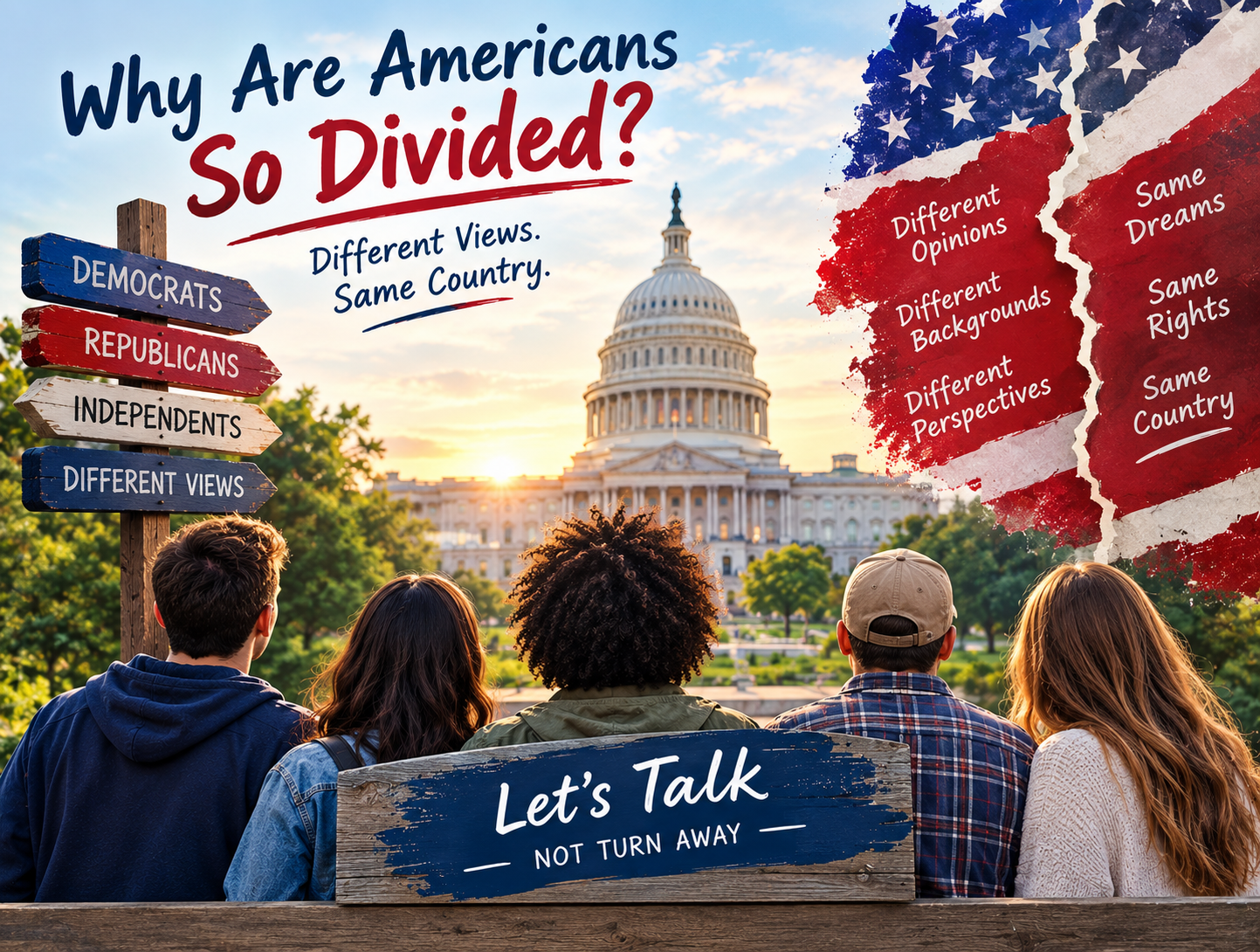
Walk into almost any political conversation today, and chances are it will not take long before someone brings up Democrats, Republicans, elections, the media, or the latest fight in Washington. Political disagreement is nothing new in America. What feels different is how quickly disagreement can turn personal.
Neighbors stop talking. Families avoid certain subjects at dinner. People judge each other based on a bumper sticker, a social media post, or who they voted for. Research has also found that political divisions can affect everyday life, not just elections and government.
But are Americans really as different as we have been led to believe? Or have we simply become very good at focusing on everything that separates us?
When Politics Becomes Personal
Having different political opinions is part of living in a free country. Americans should be able to disagree about taxes, healthcare, immigration, education, government spending, gun laws, foreign policy, and countless other issues.
The problem begins when a political opinion becomes a judgment about someone’s character.
A person who votes differently is suddenly treated as ignorant, dangerous, selfish, or even an enemy. Once that happens, productive conversation becomes almost impossible. Instead of asking, “Why do you see it that way?” people start asking, “How can anyone possibly think like that?”
That attitude creates a cycle. The more people see political opponents as enemies, the less willing they become to listen. And the less they listen, the easier it becomes to believe the worst about the other side.
The Role of News and Social Media
Americans have access to more information than previous generations could have imagined. News websites, podcasts, television, social media, newsletters, videos, and online communities allow people to follow politics around the clock.
That sounds like a good thing. In many ways, it is. But constant information does not automatically mean better understanding.
People can spend hours consuming information that confirms what they already believe while rarely hearing a serious argument from the other side. Social media can make this even stronger because controversial content often attracts attention and reactions.
That does not mean people should stop following the news or expressing their opinions. It means citizens need to become more thoughtful about what they consume.
Before sharing a political claim, ask:
- Where did this information come from?
- Is the source trustworthy?
- Am I seeing the full story or just one side?
- Would I believe this claim if it supported the other political party?
- Am I reacting to facts or simply reacting to anger?
Those simple questions can change the quality of political conversations.
We Have More in Common Than We Think
Political arguments can make America look like two completely separate countries. But ordinary Americans often share many of the same concerns.
People want safe communities. They want their families to have opportunities. They want to afford housing, food, healthcare, and education. They want their voices heard by government. They want their rights respected. They want their children to have a better future.
Even when Americans disagree about how to reach those goals, the goals themselves are often surprisingly familiar. The real challenge is learning to recognize common ground without pretending that disagreements do not exist.
Can Americans Learn to Disagree Again?
America does not need everyone to think alike. A healthy democracy depends on debate, disagreement, criticism, and citizens who are willing to challenge those in power.
What it needs is a better way to disagree.
That starts with ordinary citizens. You do not have to change someone’s political beliefs to have a productive conversation. Sometimes listening is enough. Sometimes asking a better question is enough. And sometimes the most patriotic thing you can do is admit that you might not have the entire picture.
Political division will not disappear overnight. But Americans can decide that disagreement does not have to mean hatred.
One Country, Different Views
We can be Democrats, Republicans, independents, conservatives, liberals, or something else entirely and still be Americans first.
Our differences should not erase our shared citizenship.
US United believes the country is stronger when citizens are willing to speak freely, listen honestly, stand up for their rights, and remember that the person across the political aisle is still their fellow American.