
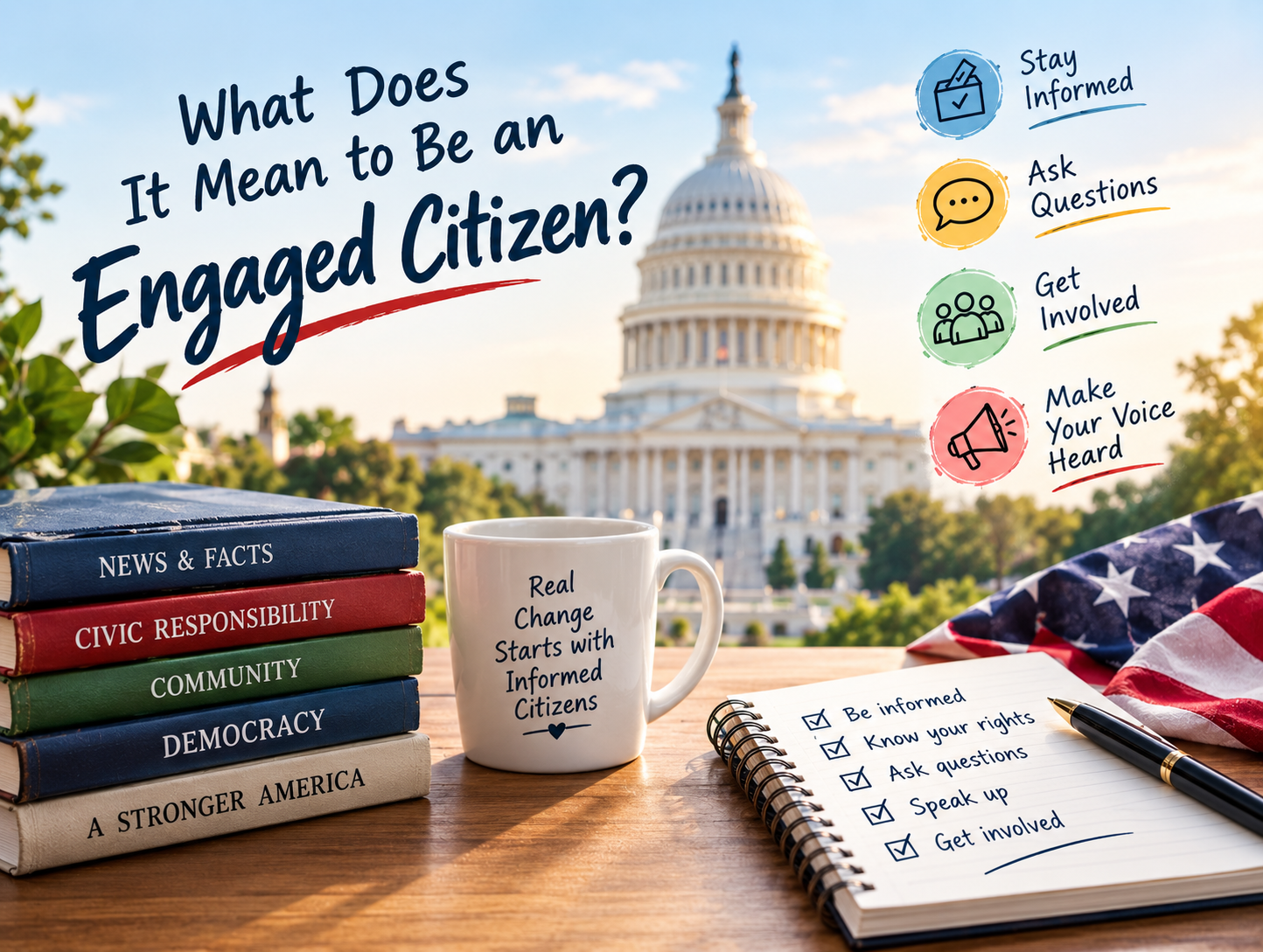
Being an engaged citizen is about much more than showing up to vote every few years. Voting matters, but citizenship does not begin and end on Election Day.
An engaged citizen pays attention, asks questions, understands their rights, participates in their community, and is willing to speak up when something matters. They do not have to be a political expert or spend every evening watching the news. They simply refuse to become completely disconnected from what is happening around them.
Recent research from the Pew Research Center shows that Americans participate in public life in very different ways. Some are highly active in politics and community life, while others mainly follow the news or participate very little.
Being Informed Is the First Step
You cannot participate meaningfully if you have no idea what is happening.
That does not mean believing everything you see online. In fact, being an informed citizen requires some skepticism. Political information can be incomplete, exaggerated, misleading, or presented without important context.
Take the time to check reliable sources. Read beyond the headline. Look at different perspectives. Pay attention to what elected officials actually say and do rather than relying entirely on someone else’s interpretation.
A few good habits can make a difference:
- Follow issues, not just political personalities.
- Check important claims before sharing them.
- Learn about your local government, not only Washington.
- Understand what your elected representatives are responsible for.
- Pay attention to proposed laws and policies that affect your community.
Being informed does not mean agreeing with everyone. It means knowing enough to form your own opinion.
Your Voice Matters Beyond Election Day
Voting is one of the clearest ways citizens participate, but it is not the only one.
Citizens can contact elected officials, attend public meetings, volunteer, participate in community organizations, peacefully demonstrate, write letters, speak at appropriate public forums, and discuss important issues with their neighbors.
Pew’s 2026 research found that civic participation takes many forms, from voting and volunteering to contacting elected officials and following the news. The study also found that Democrats and Republicans participate in public life in broadly similar ways, even though their political views may differ.
How Americans Are Engaging
The research identified four broad groups of U.S. adults based on their participation across politics, civic life, news, and other activities.
The point is not that every American needs to become a “Mobilizer.” People have different responsibilities, interests, time, and circumstances. The bigger point is that there are many ways to participate.
You can start small.
Know Your Rights
An engaged citizen should understand the basic freedoms and responsibilities that come with citizenship. That includes understanding constitutional protections, learning how government works, and knowing the difference between lawful civic participation and actions that cross legal boundaries.
Free speech, peaceful assembly, petitioning government, and participation in public life are important parts of American democracy. They also come with responsibilities. Being passionate about an issue does not give anyone the right to threaten, harass, or harm another person.
Civic engagement works best when people stand firmly for what they believe while respecting the rights of others.
Engagement Requires Responsibility Too
It is easy to criticize politicians. It is harder to stay involved when there is no election happening and no viral controversy dominating the news.
Real civic engagement requires consistency.
It means paying attention when local decisions are being made. It means asking questions instead of accepting every political talking point. It means listening when someone disagrees with you. And it means being willing to hold your own preferred leaders accountable.
That last part matters.
Citizens should not give politicians a free pass simply because they belong to the party they support.
Don’t Be a Spectator!
America does not belong only to politicians, political parties, activists, or media personalities. It belongs to its citizens.
Your voice may feel small on its own, but citizenship has always been about people participating together. You do not have to know everything. You do not have to agree with everyone. You simply have to care enough to pay attention and take part.
Stay informed. Know your rights. Ask questions. Speak up. Get involved.Your country needs citizens who are willing to participate, not just spectators watching from the sidelines- for the good of the nation.